
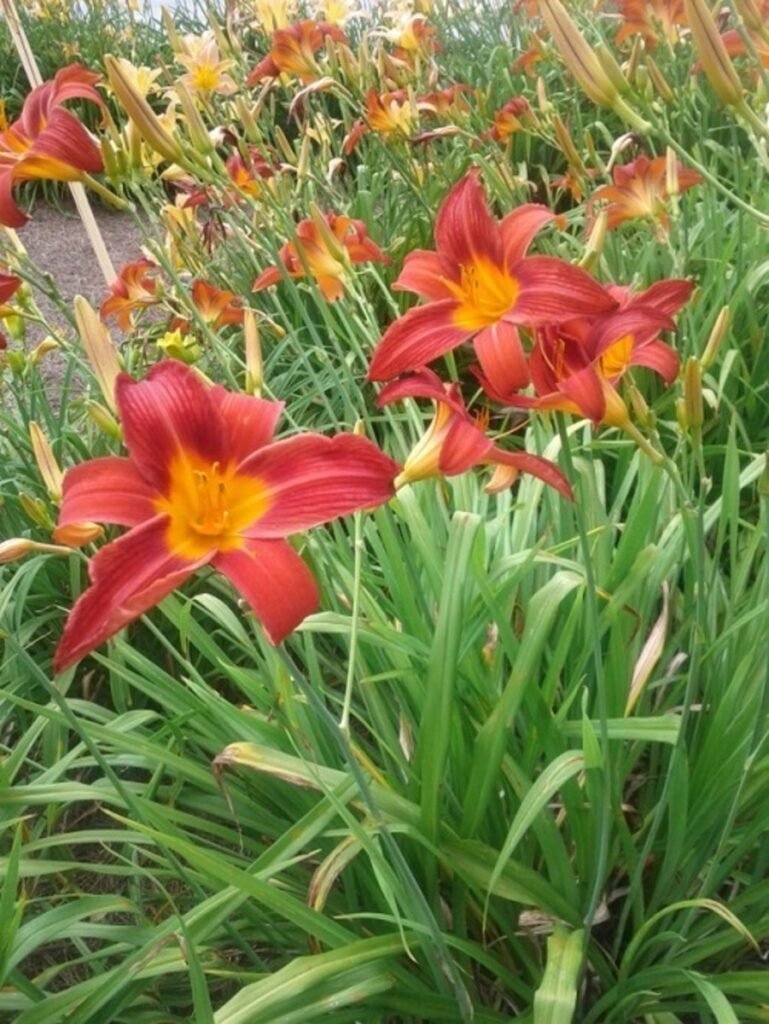
Daylilies are the perfect perennial.
Why Daylilies Are the Perfect Perennial
It is hard to top the classic long-lasting beauty of daylilies. Known by many as the “perfect perennial,” daylilies can bloom happily from late spring to late summer with proper care and the right cultivar. They are popular for their recurring blooms and the vast array of flower colors and shapes.
Native to Asia, the scientific name for daylilies is Hemerocallis, from the Greek words for day and beauty, describing the life span of one blossom.
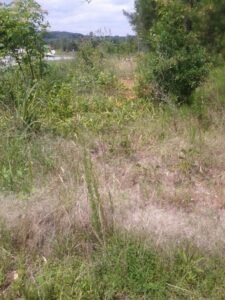
Although the showy, hardy daylily thrives in slightly acidic soil, they are highly adaptable to all soil types. Some cultivars have even spread to grow like wildflowers. Daylilies live for years and can often be seen growing in abandoned lots.
Landscaping With Daylilies
Daylilies can be used in landscaping in a variety of ways. Use them on a hill or slope that is hard to mow. Popular choices in commercial landscaping, they are good for perimeter planting.
Plant them alongside evergreens such as boxwood or English ivy for a dramatic effect, or just plant them in your flower garden for long-lasting summer beauty.
Growing and Caring for Daylilies
Daylilies grow in several hardiness zones, but it is probably best to purchase them from a local nursery rather than ordering them online. This way you will be sure to get the right cultivars for your zone.
Plant them in the spring or fall while the soil is warm. They will need to establish a root system before winter if planted in the fall. For spring planting, plant when the soil is warm. Although they will tolerate shade, they do best with at least six hours of full sun.
All cultivars grow in clumps and have crowns with flowers that branch out from a stem called the scape. They range in height from 1–3 feet.
Care Tips for Growing Healthy Daylilies
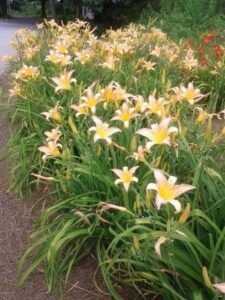
Daylilies are survivors and can withstand neglect, as we have seen with the ones growing in an abandoned lot. Follow these tips for knockout daylilies.
- Plant in slightly acidic soil in a location that gets at least six hours of sunlight.
- Choose the right cultivars for your growing zone.
- Fertilize with time-release fertilizer while they are growing the most.
- Water the fertilizer thoroughly.
- Beginning in June, fertilize repeat-blooming cultivars with a household plant fertilizer once a month.
- Deadhead spent blooms.
- In late summer, trim off brown leaves.
- Fertilize again after blooming for the season.
Dividing Daylilies
Divide daylilies to keep them from overcrowding, getting taken over by nearby plants, or simply because you change your mind about where you want them. Divide right after summer flowering, making sure each clump removed has an intact root system.
Get them into the ground quickly, giving them at least two months to become established in the new location before winter. The time to divide will vary between growing zones.
Daylilies in Arrangements
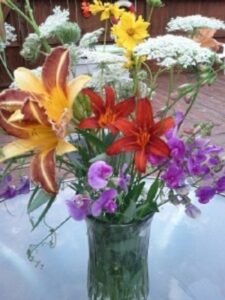
Daylilies are not used as cut flowers for formal arrangements; however, as new flowers grow and open to replace picked ones quickly, they are perfect for informal arrangements.
Pair a few with Queen Anne’s Lace and other wildflowers for a charming informal bouquet for outdoor entertaining.
Hybridizing Daylilies
A fascinating feature of daylilies is the thousands of cultivars developed by hybridizers. There are currently over 35,000 of them in lots of glorious colors: from creamy ivory to deep reds and purples. In addition to solid colors, some cultivars have a different color “throat,” or inside part of the flower.
Form, shape, and color vary between cultivars. Some daylilies have been developed to look like a flower within a flower; others are trumpet-shaped, resembling a true lily.
Traits of Daylilies Developed by Hybridizers
- Scent
- Height
- Ruffled edges
- Flower color
- Flower shape
- Contrasting color in the center
- Glittery look referred to as diamond dust
10 Popular Daylily Cultivars
| Cultivar | Color | Growing Zone |
| Always Afternoon | Mauve & Purple | 4–10 |
| Moonlit Masquerade | Ivory & Purple | 3–9 |
| Frilly Bliss | Soft Pink & Rose Colored Halo | 3–9 |
| Bill Norris | Deep Yellow | 3–10 |
| Long Stocking | Red & Bright Yellow | 4–10 |
| Black Ambrosia | Blackish Purple | 4–10 |
| Pirate’s Patch | Ivory & Purple | 5–10 |
| Baby Boomer | Yellow & Dark Purple | 5–10 |
| Aaron’s Little Whopper | Yellow & Red | 4–10 |
| Orange Velvet | Bright Orange | 3–9 |