
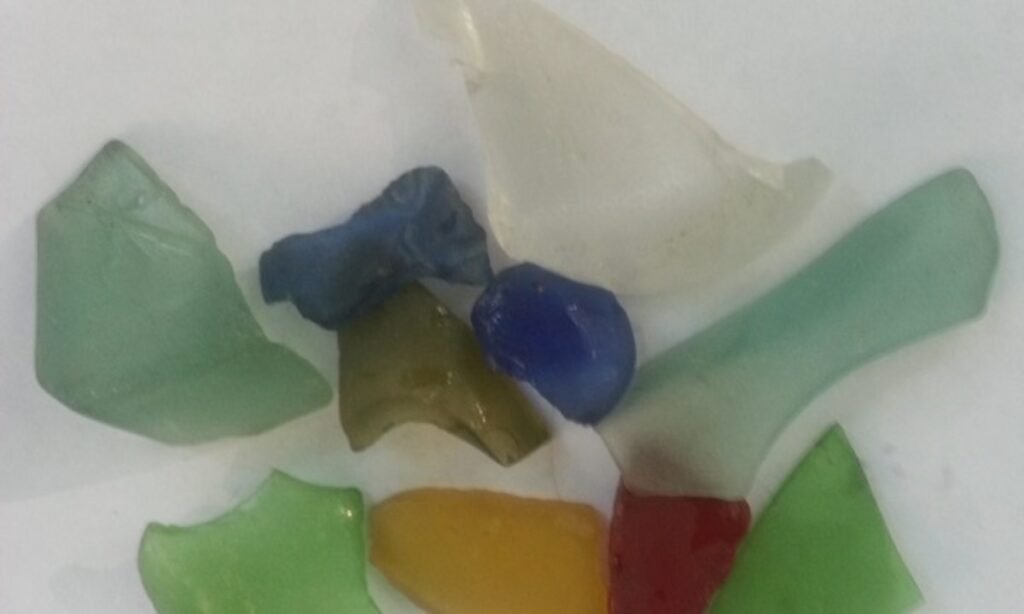
What is Sea Glass or Beach Glass?
I was first introduced to sea glass collecting by my sister, a prominent realtor and a year-round resident of one of North Carolina’s quaintest beaches, Ocean Isle Beach. She was agog with the hobby and gave me a call to encourage my participation.
“Try to find a red piece. Blue is good too. Call me and let me know what you find.”
“So what,” I thought. ” A piece of glass?” Then one day while walking the shores of the Ashley River at the mouth of the Charleston Harbor, I spotted a frosty white piece of glass.
“This is it! This is what she is talking about.” I had found my first piece of sea glass. I was hooked!
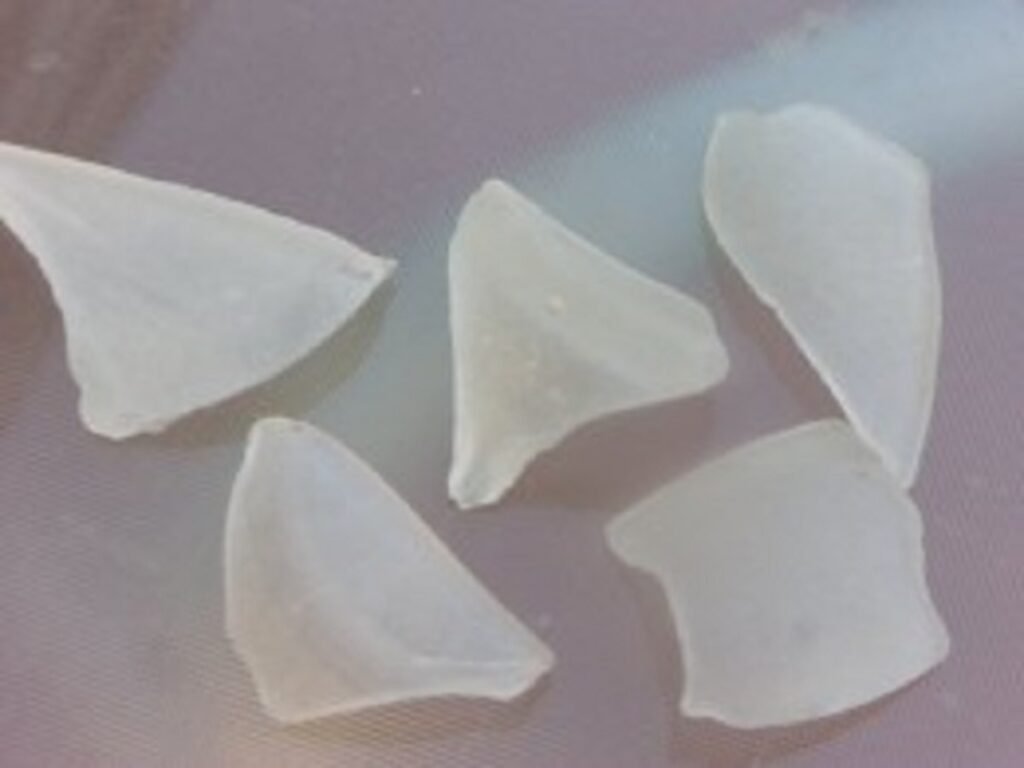
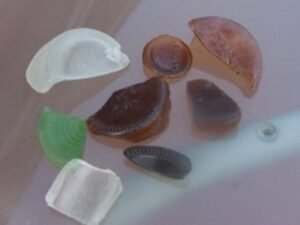
Sea or beach glass is broken glass that is tumbled for years and smoothed by water, sand, gravel and the elements. The term beach glass is inclusive of that found on freshwater bays and the oceans’ beaches. Sea glass refers exclusively to pieces found on saltwater shores.
Hydration is a slow process in which the lime and soda present in the glass are washed out by the water to combine with other elements. This process, along with tossing and tumbling, will help give the pieces a frosty look. A true piece of sea glass must have two distinct qualities present: smooth edges and a frosty worn look.
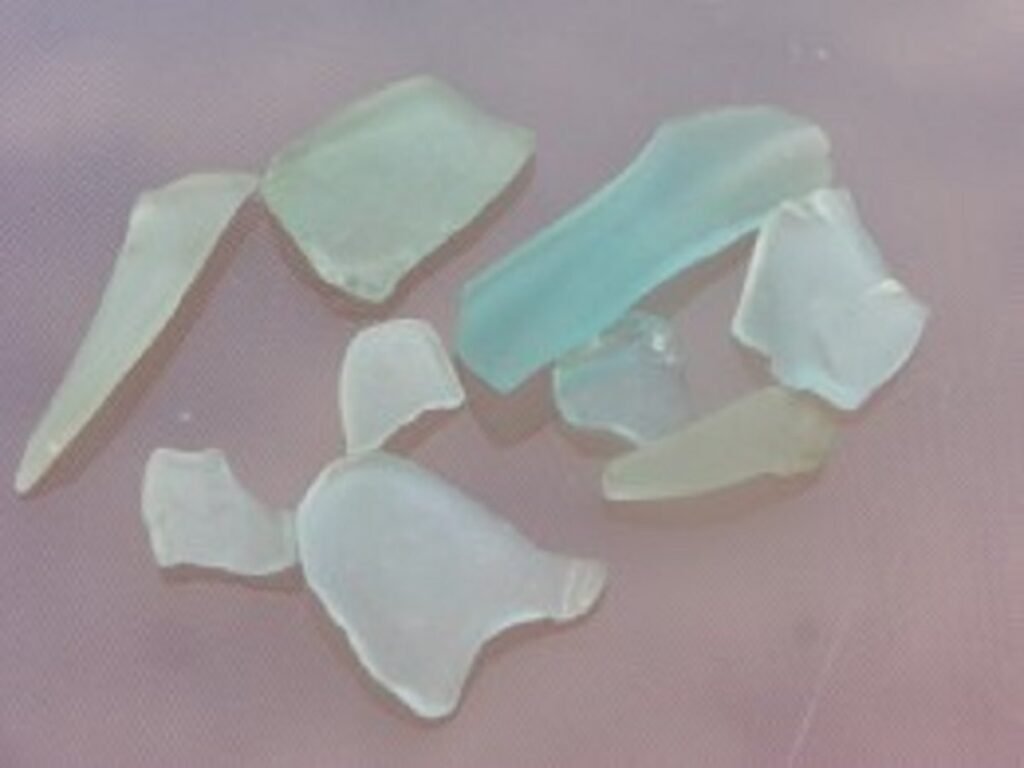
Identifying Sea or Beach Glass
Color and imprints are ways of identifying sea and beach glass. The most commonly found colors are white, brown, and green. Newer soda bottles, jars, plates, windows, and auto glass are sources of the white sea or beach glass. Green can be found in various shades. Beer, wine, juice, and soft drink bottles are the most common sources. Brown pieces are mostly from beer and medicine bottles.
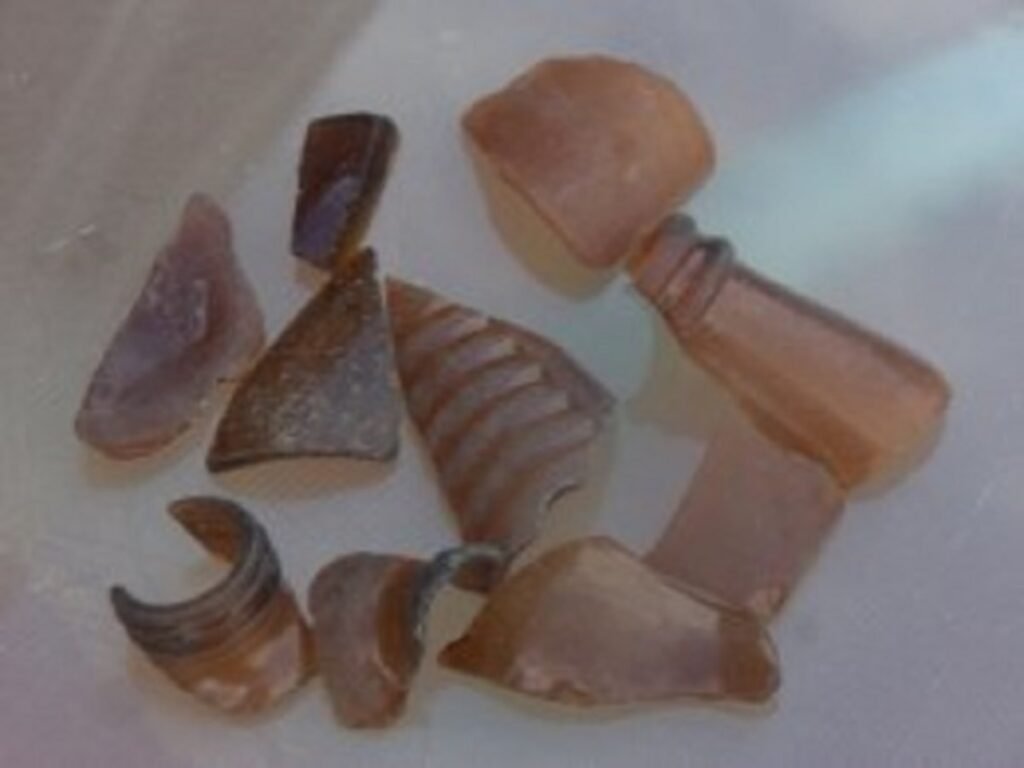
Many products packaged in plastic today used to be sold in glass containers. Amber pieces come from bleach and medicine bottles. Some of these pieces have numbers and imprints that are visible enough for identification. Lighter amber comes from auto or boat taillights
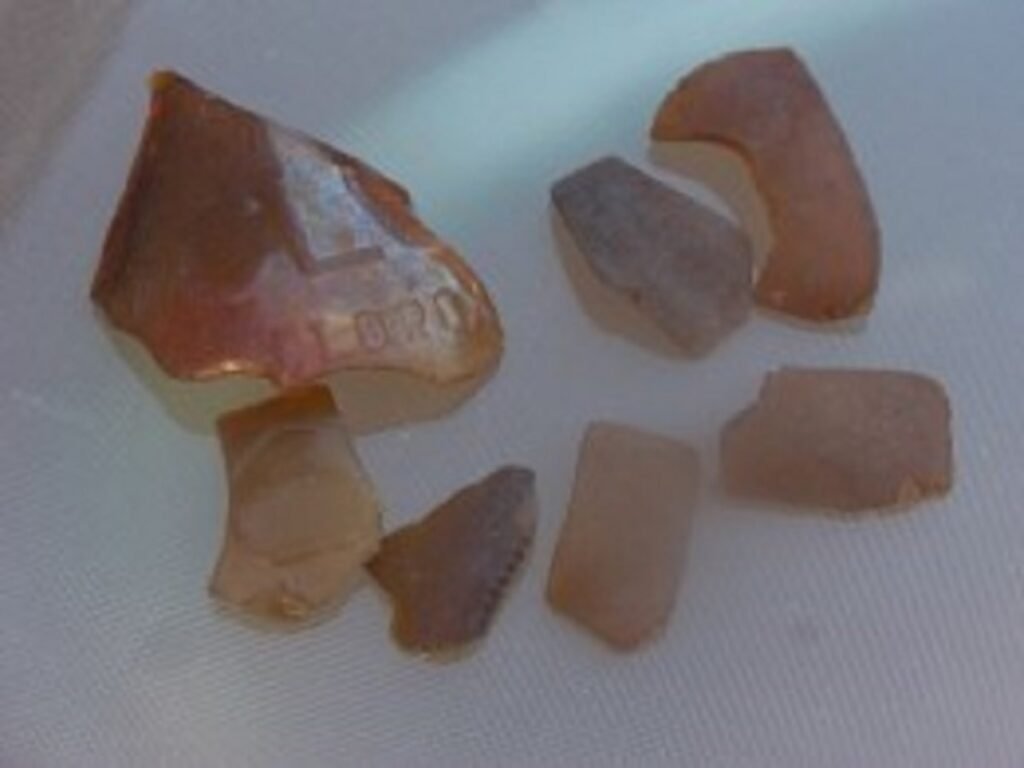
Old ink, fruit, and baking soda jars are the source of soft blues and forest green. Cobalt and cornflower blues are rarer and come from Phillips Milk of Magnesia, Noxema, and Bromo Seltzer bottles. Pastel pinks and grays are from old Depression Era glassware.
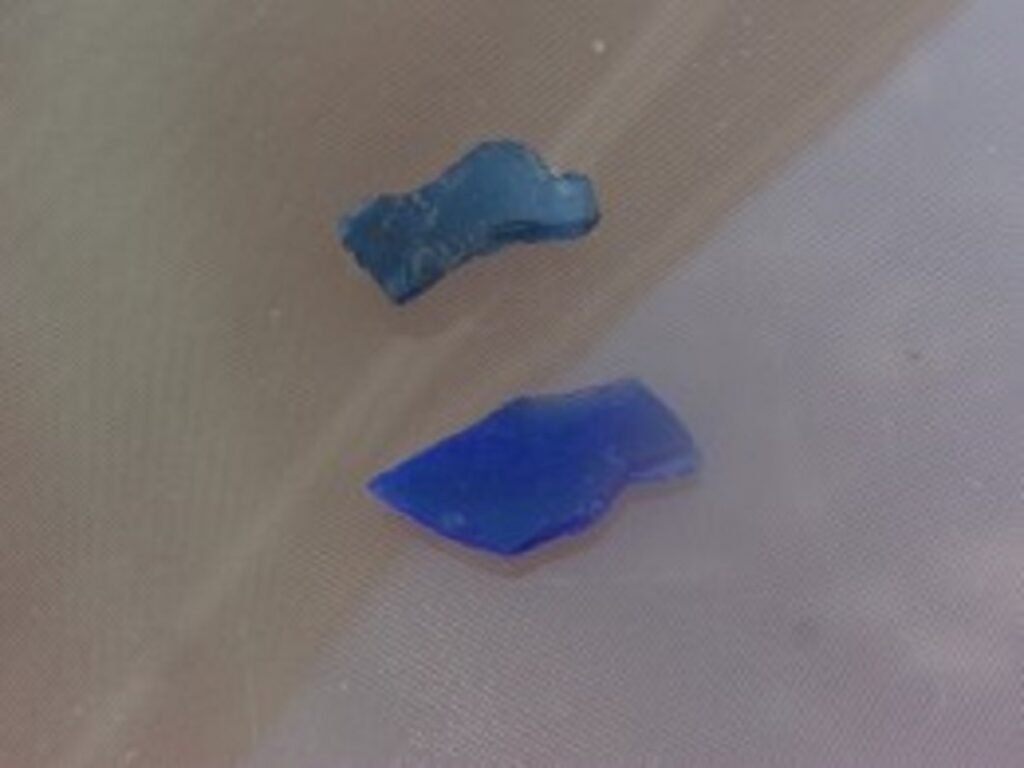
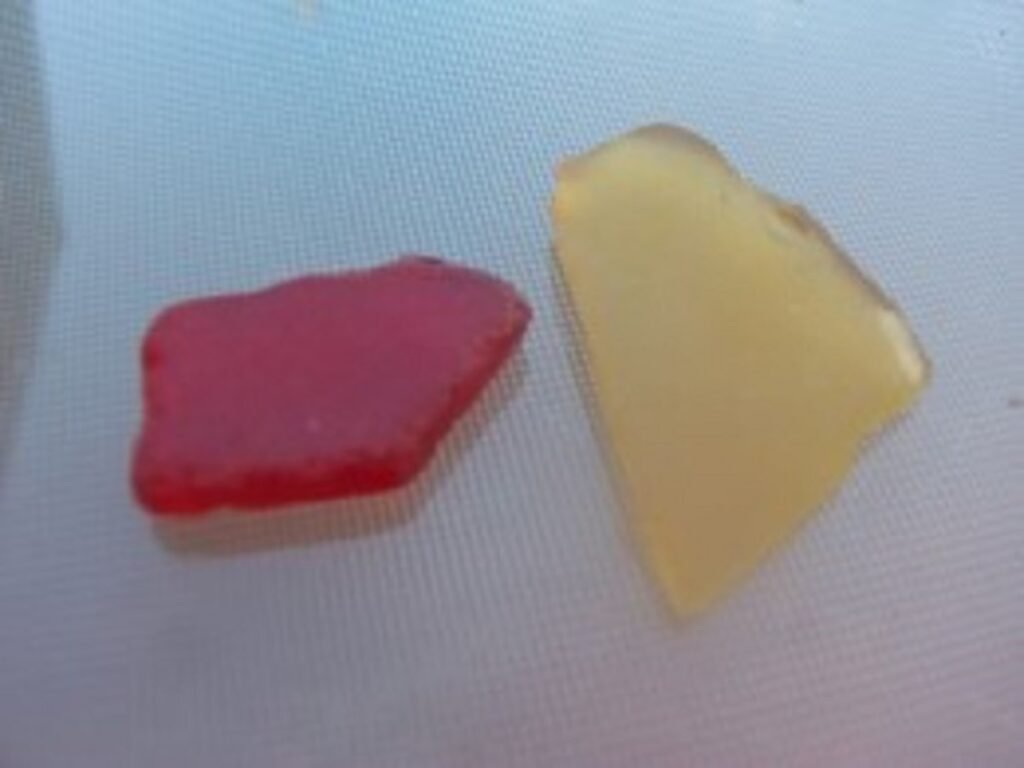
Red, orange, and black are the rarest colors for sea and beach glass. Red comes from old Schlitz beer bottles, dinnerware, or auto and nautical lights. Carnival glass and other dinnerware are the sources of orange pieces.
Dark olive or black pieces are from very old containers used to transport “spirits” in the 18th century. A rare dark purple, almost black, can be traced to insulators on the bottom of early light bulbs.
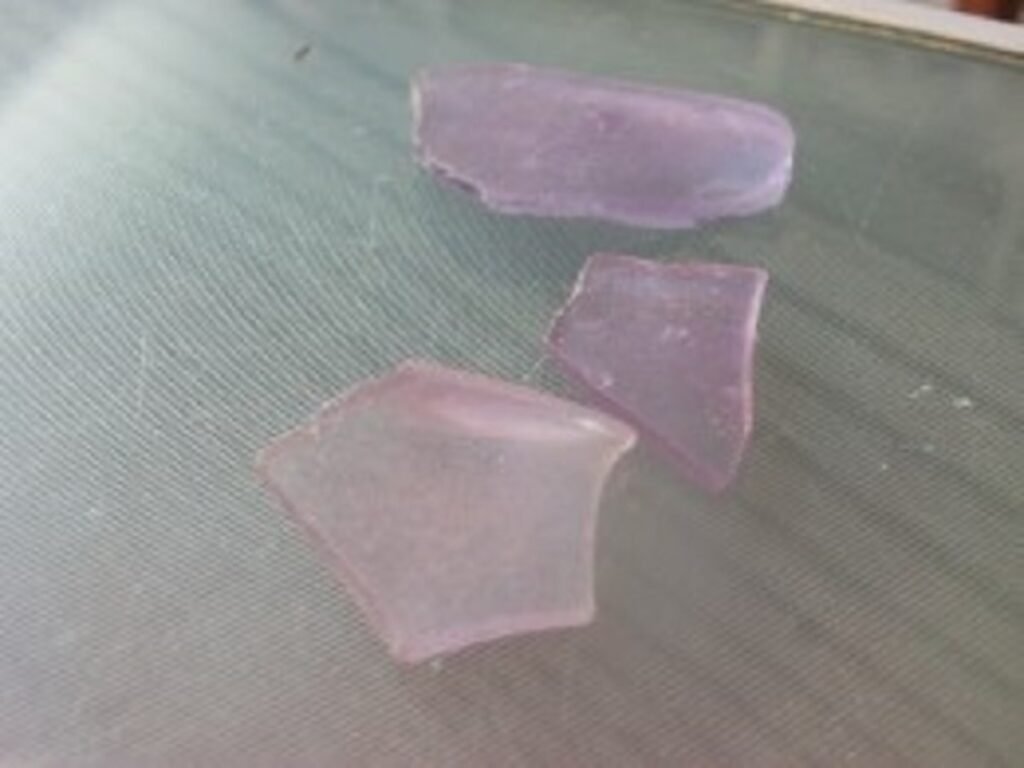
Color charts have been created to help identify sea and beach glass, but cannot be totally accurate because of the many nuances in the colors. More uncommon green pieces from very old Coca-Cola, RC, Dr. Pepper, and beer bottles have variations in color because the bottles were locally produced. Some pieces that appear as a light lavender color may actually be from white glass sources. Before WWI, the chemical used to make glass white gave it a greenish tint. After the war broke out, the chemical was changed. The replacement chemical gave the glass a lavender tint.
Finding and Collecting Sea or Beach Glass
People have been finding and collecting sea and beach glass for a long time. In the past, the frosty glass pieces were called mermaids’ tears or sea gems. Most sea glass found in the United States has been from the late 1800s to the 1960s.
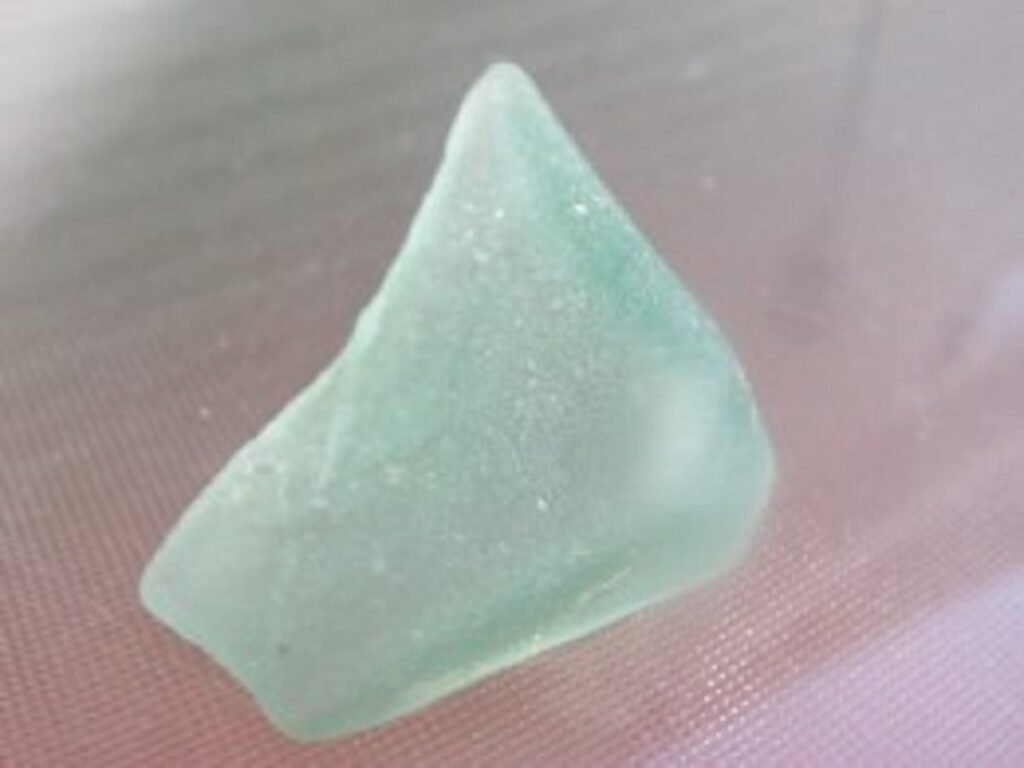
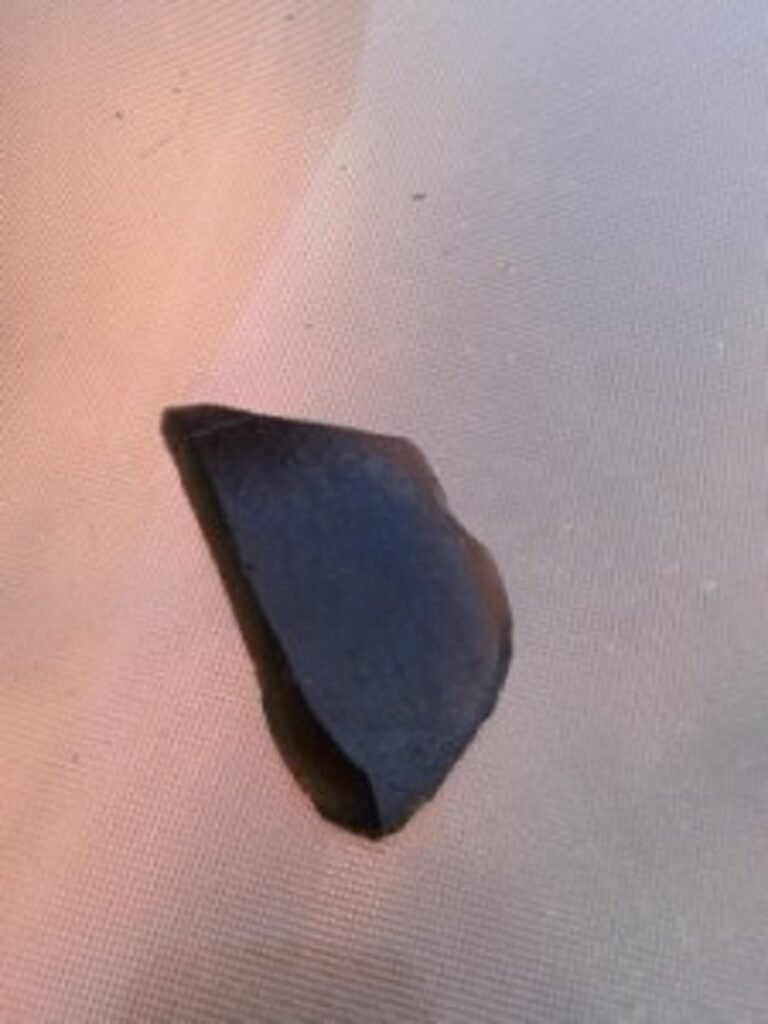
The best time to find sea glass is after extremely low or neap tides and the first low tide after a storm. The best beaches for sea and beach glass searching are located near what is or used to be the city dump. The most bountiful beaches for finding beach and sea glass in the US have been in Northern California, parts of Hawaii, the southern shores of the Great Lakes, and the northeast coast. Beaches in the Caribbean and Atlantic are good sources of rubbish from old “rum runners.”My rarest piece of sea glass is dark, dark green, almost black. It is from an old 18th-century spirit bottle
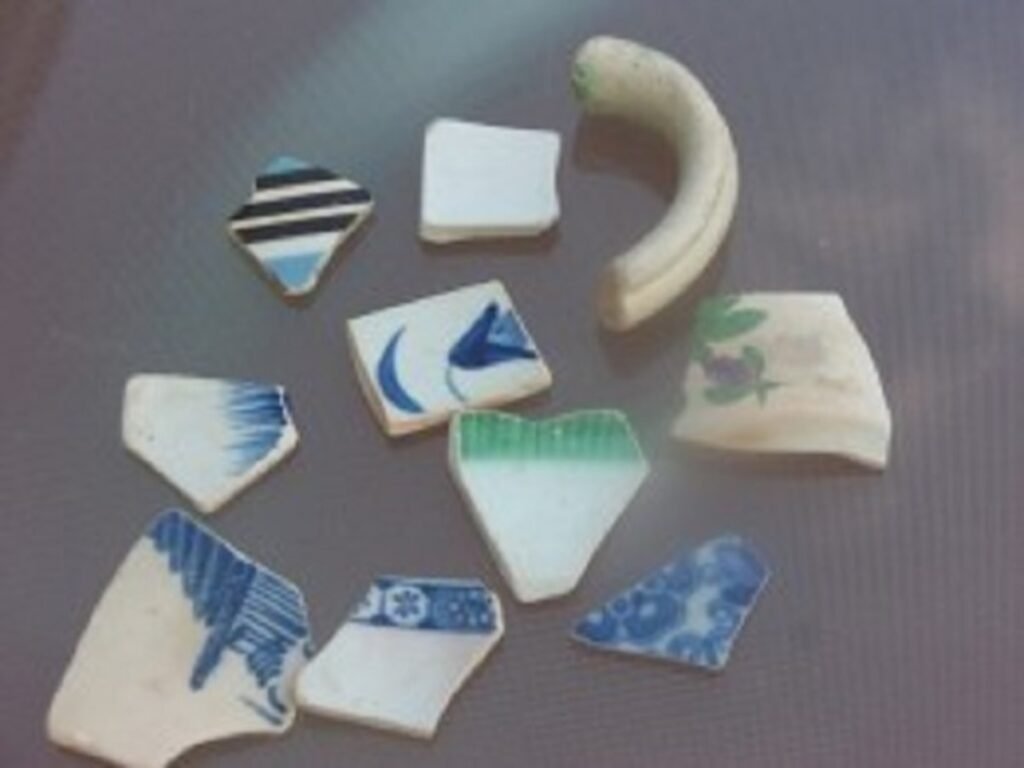
Ceramic shards from old china and dishes are fun finds when looking for sea glass. They make awesome additions to mosaics.
Where to Find Sea Glass
Glass Beach, located in Northern California, was the former town dump before “going green” and is a sea glass lover’s paradise. There are reports that it is no longer “allowed” to be taken, but if that is the case, check out Seaside State Beach in Monterey.
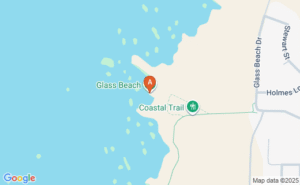
Glass Beach, CA: Glass Beach, Fort Bragg, CA 95437, USA
Sea and beach glass are becoming harder and harder to find because of more collectors and anti-litter campaigns. Avid collectors are willing to travel worldwide to search for their treasures.
If you can’t be near the best beaches to find sea or beach glass, you can still find it with some persistence. All of my pieces are from beaches in the Southeastern US. It may take a while to have a sizable collection, but once you do, you can use your pieces in some beautiful displays and artwork.
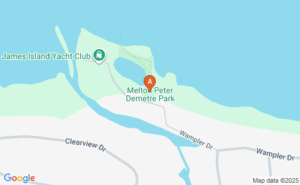
Sunrise Park James Island SC: Melton Peter Demetre Park, 640 Wampler Dr, Charleston, SC 29412, USA
Common Sources of Sea Glass and its Color
| Color | Source |
| white | soda bottles, jars, plates, windows, auto glass |
| orange | Carnival glass |
| brown | beer bottles, medicine bottles |
| yellow-green/kelly green | beer, juice, soft drink bottles |
| uncommon green | early Coke, Dr. Pepper, wine and beer bottles |
| pink, gray | Depression glass |
| lime green | 1950s soda bottle |
| lavender | originally white tinted by replacement chemical |
| cobalt and cornflower blue | Noxema, Phillips, Bromo Seltzer, medicine, poison |
| red | old Schlitz bottle, dinnerware, car and nautical lights |
| light amber | auto or boat tail lights |
| dark green | old bottles used to transport spirits |
Crafting And Decorating With Sea Glass
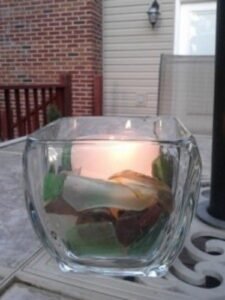
Decorating and crafting with sea and beach glass is an art form. Artisans create beautiful jewelry with it. Wreaths, wind chimes, mobiles, and mosaics are popular crafts using sea and beach glass. A simple and elegant display with glass containers is an easy way to display your collection. Then your pieces aren’t glued down, and you can take them out to enjoy their beauty up close.
Leave it to humans to try to copy what takes nature and time to create. Manufactured sea glass is made by tumbling glass in a rock tumbler. It is sold in bulk and is plentiful and inexpensive. It’s great for those who want to create crafts with sea and beach glass but can’t go searching for it.
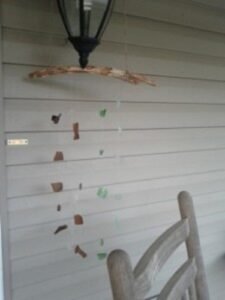
A wind chime or mobile is a clever way to craft with sea glass. Bottle tops and bottoms are great for this. J.M. Porter, owner of a sea glass specialty shop in Isleford, Maine, near Bar Harbor, uses an 8-pound spider-wire fishing line, super glue, and driftwood to create a rustic wind chime. The secret is in tying a knot and cinching the sea glass with the fishing line and then using brush-on Krazy Glue to secure. With this technique, no holes need to be drilled in the glass.
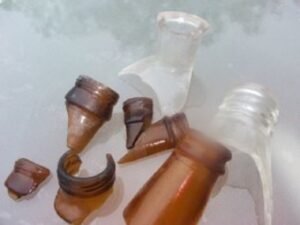
I decided to give it a try. I am very protective of my sea glass, so I decided to use the greens, browns, and whites of which I have the most. It worked well. The trick is in spacing out the pieces. Cut a 3-foot strand of the Spiderwire. Leaving 7 or 8 inches at the top and bottom, work horizontally to create tiers. Tie knots around the pieces and secure with the brush-on glue. Then tie the strands to a wooden holder, such as a piece of driftwood. Make a rustic hanger from twine.
Another Way to Recycle
To me, collecting and crafting with sea or beach glass is also a way to recycle. The litterbugs who left all this glass behind have given us a fun hobby and great decorating and crafting ideas!
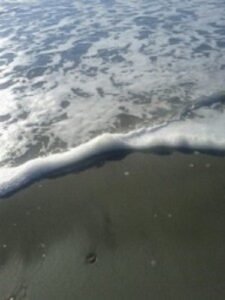
Sea glass comes from discarded glass that is tumbled by the action of the waves over the years.