
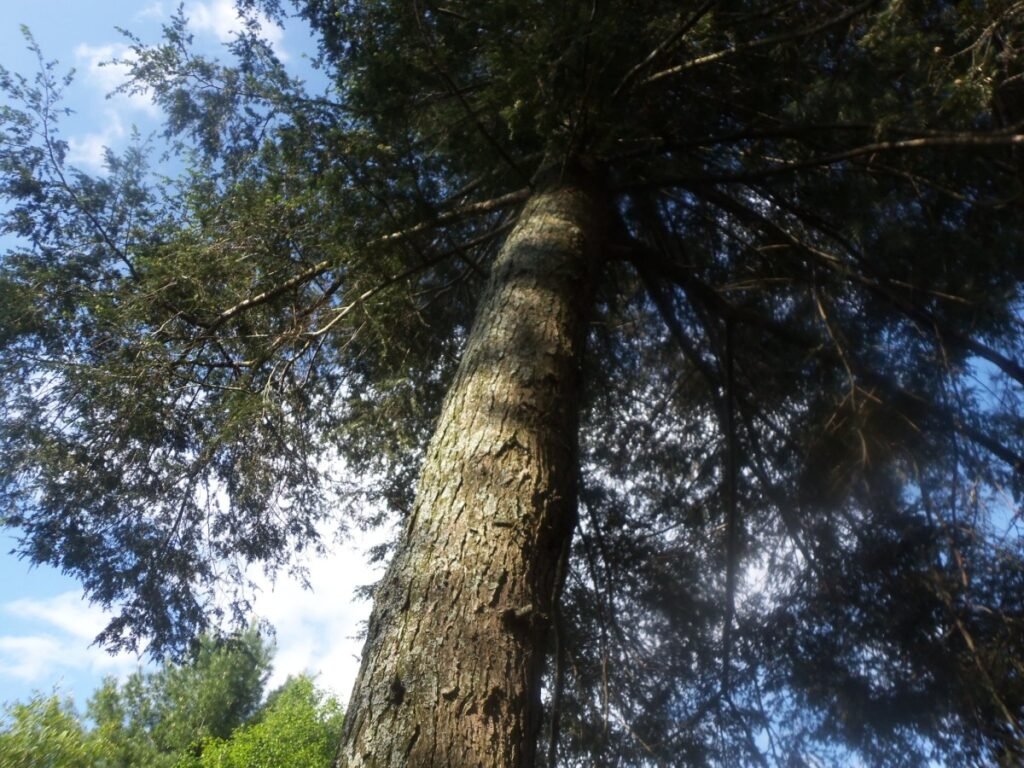
Eastern and Carolina Hemlocks
The beautiful, stately eastern hemlock and Carolina hemlock are conifers that grace forests from Nova Scotia in the north to Alabama in the south, and westward into parts of Michigan, Minnesota, and Wisconsin. Carolina hemlock is a closely related species that grows in the southeastern U.S.
Providing food and shelter for wildlife, hemlocks help to moderate temperatures and cool the forest floor. They play a major role in preventing soil erosion along riverside banks. Their evergreen beauty makes them a popular choice for planting on private property. Called the “redwoods of the east,” hemlocks grow slowly and live long lives. They can grow up to 100 feet and live up to 400 years. But in much of the eastern U.S., they are an endangered species.
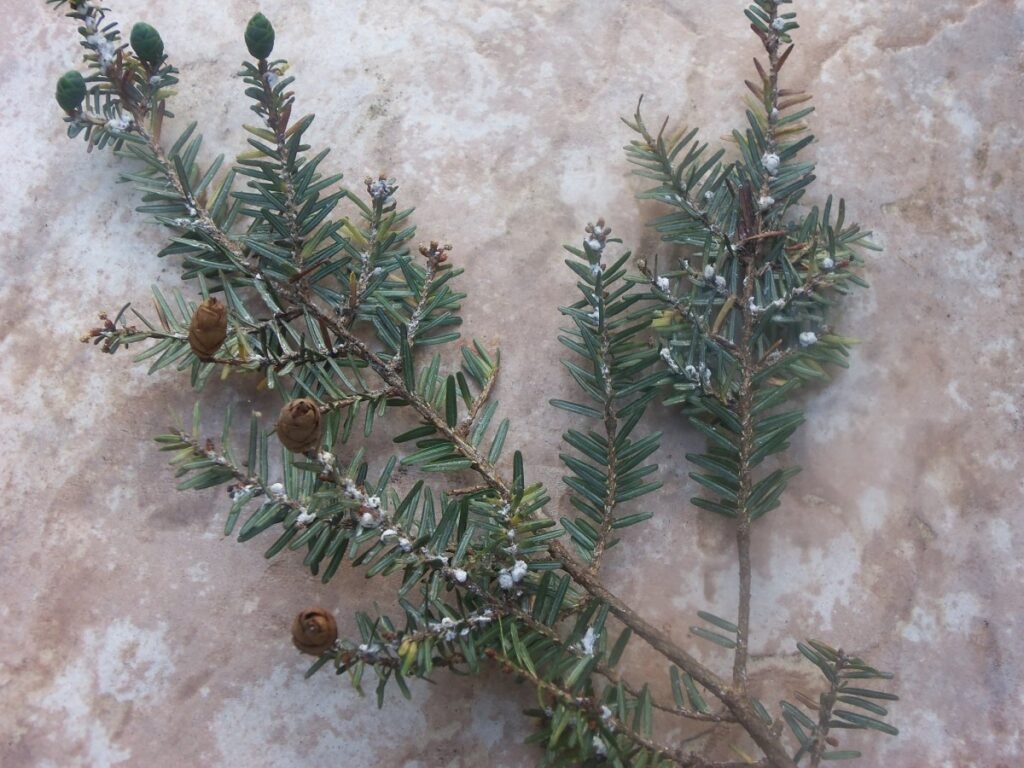
The Adelgid Threat
Eastern and Carolina hemlocks are being attacked by an insect that is not native to the region. In the 1950s, the adelgid made its way into the eastern U.S. from Asia. The insect first appeared in the Richmond, Virginia/Washington, D.C. area. Since then, an estimated 50 percent of hemlocks in 11 states have been infected. The tiny insect, about 1/16th of an inch long, is identified by the white woolly tufts it creates on the hemlock’s needles. It is known as the hemlock woolly adelgid, or HWA.
The adelgid reproduces asexually and can lay up to 300 eggs for two generations of new insects per year. Not only do adelgids multiply profusely, but they also spread easily. They are so tiny they can be blown by the wind or become “hitchhikers” carried by birds and other animals.
Effects of Woolly Adelgid on Hemlocks
The HWA attacks the hemlock by sucking the sap from the needles. The hemlock’s needles are the tree’s leaves where photosynthesis takes place, and nutrients are made. At the same time, the insect releases a toxin that the leaves absorb. The result is loss of needles, meaning poor nutrition for the tree. Thinning foliage will be noticeable in the tree’s crown. From a distance, the tree will no longer appear lush green but rather a dull gray in color. Infected trees not treated will die within four to ten years.
After its accidental arrival on the North American continent, the HWA spread westward towards the Blue Ridge Mountains. Because the damage the HWA inflicts is so slow, the damage was not discovered for a decade or more. Slowly, the damage was noticed, and efforts began to treat the hemlocks and stop the spread of HWA.
Areas Most Affected by Woolly Adelgid
A 2009 study found that HWA was spreading faster than expected in the southern Appalachia, probably because of air pollution and climate. This same area was hit especially hard by the great chestnut tree blight of the early 1900s, which significantly changed the forest composition. The area is still rich with beautiful national parks and forests. Saving the hemlocks is urgent.
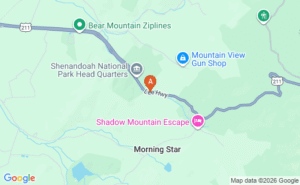
Shenandoah National Park: Shenandoah National Park, 3655 US Highway 211 E, Luray, VA 22835, USA
Located just 75 miles from Washington, D.C., Shenandoah National Park is 200,000 acres of recreational beauty in Virginia. Cascading waterfalls and beautiful vistas give park visitors a serene experience.
The HWA was discovered here in 1988. The hemlocks began dying two years later.
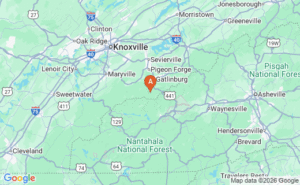
Great Smoky Mountains National Park: Great Smoky Mountains National Park, Tennessee, USA
The Great Smoky Mountains National Park is located at the border of North Carolina and Tennessee. It is America’s most-visited national park. Wildlife is abundant and diverse here, with 522,419 acres being almost 95 percent forest. The HWA attack here was first noticed in 2002.
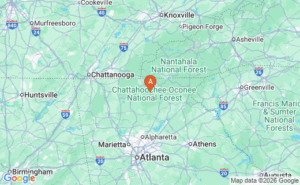
Chattahoochee Oconee National Forest: Chattahoochee National Forest, Georgia 30572, USA
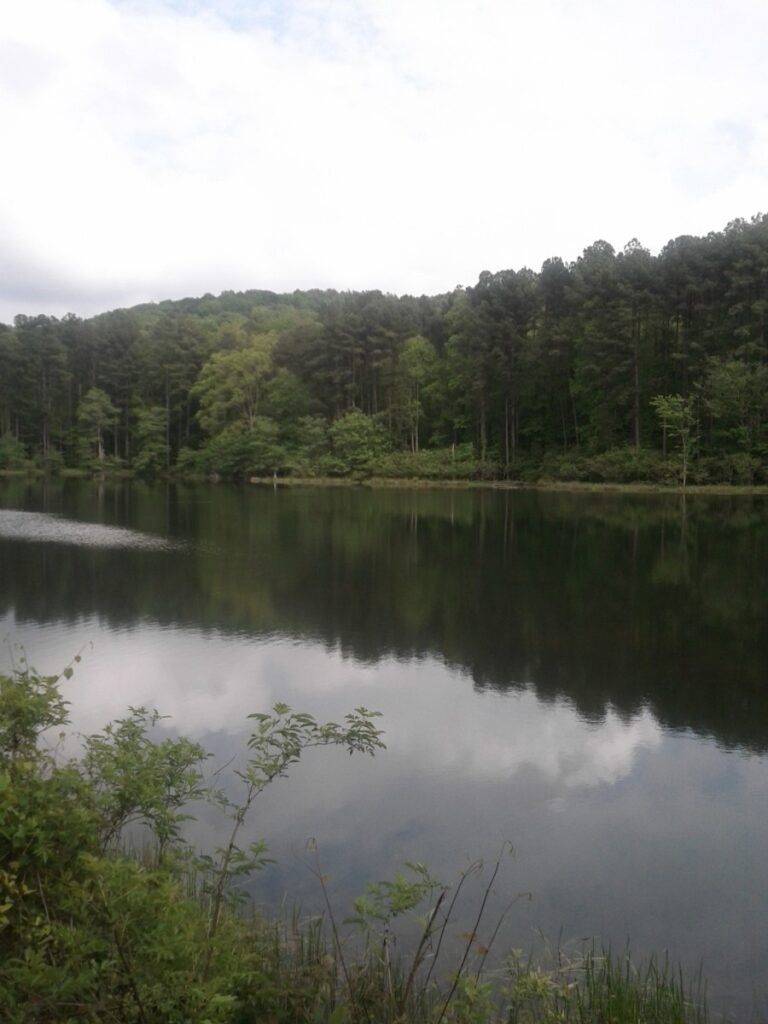
The Chattahoochee-Oconee National Forest includes 865,855 acres spread across the South Carolina-Georgia border. Named for the Cherokee and Creek Native Americans, it includes parks, lakes, and hiking trails that connect to the Great Appalachian Trail. It is the home of the Chattahoochee River in the North Georgia mountains, where the movie Deliverance was filmed. HWA was first detected here in 2002. An estimated 60 percent of hemlocks are infected.
Continuing Efforts to Address HWA Damage
The accidental arrival of the Asian insect decades ago, with its easy spread and slow-to-notice effects, is unfortunate. However, state and local agencies, the National Park Service, and the USDA’s Forest Service are fighting the insect aggressively. Scientists at universities and research centers have joined the fight.
In the beginning, the fight was slow. Selected trees in the Shenandoah National Park received a chemical treatment, but funds were limited, and access to so many trees was difficult. A good technique for treating the trees was needed.
In the year 2000, ten years after HWA was discovered in central Pennsylvania, arborists used a hydraulic sprayer to mix chemicals and make medicine to inject into the ground for the roots of the trees to drink.
In 2006, arborists in the Great Smoky Mountains National Park treated 40,000 trees at $20 each. However, the treatment only lasted for three years.
Chemical “warfare” turned out to be impractical for these large forests. Even after being cured, infected trees could reinfect the treated ones. Scientists and arborists began to turn to biological methods to control HWA. Just as ladybug beetles eat aphids in our gardens, Asian beetles are natural predators of the adelgid insect. Progress with this biological method was important for treating these large forests. By 2004, one type of Asian beetle used caused a reported 87 percent reduction in infected trees in five months in Virginia and Connecticut.
Researchers continue to study biological control methods using natural predators, including insects and fungi. Some scientists have studied the Asian hemlock’s natural resistance to the insect and are successfully hybridizing those trees with the Eastern and Carolina species.
Research must continue to control this difficult problem to eradicate HWA and save our beautiful, majestic hemlock trees in the eastern United States.
Treating Trees On Private Property
It is practical to use chemical and physical treatments against adelgids on Individual hemlocks and small stands. Use these tips if you notice HWA on your hemlocks.
- use chemicals from a licensed arborist
- physically remove adelgids by washing with insecticide soap
- cut off infected branches
- remove any bird feeders from near trees
- make sure any neighbors’ trees are checked and treated
- contact your local USDA extension office for further advice
Help Raise Funds For Research
The Hemlockfest Music Festival is held annually on the first full weekend in November in Dahlonega, Georgia. The festival is held to raise funds to support Georgia research labs and increase awareness of HWA. Enjoy great music, primitive camping, canoeing, exhibitions, local arts and crafts, food and drink vendors, and more. Dahlonega is only an hour’s drive north of Atlanta. Y’all come on down and have a great time for a good cause. If you can’t, please look for similar fundraising efforts in your area.