
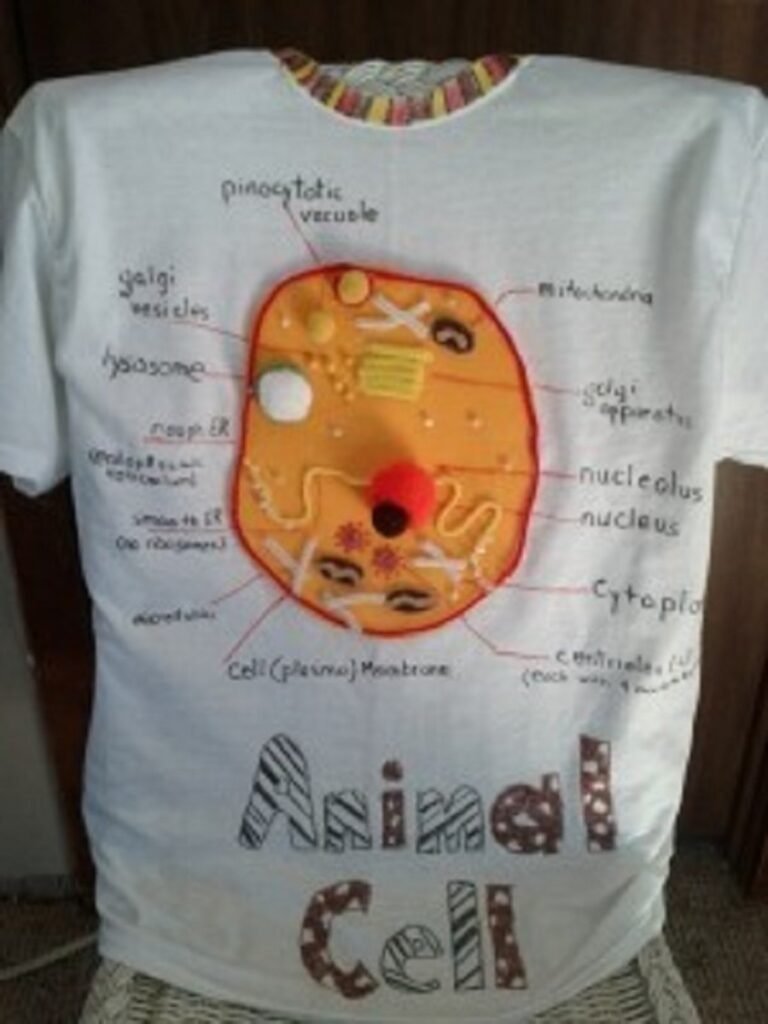
How to Make an Animal Cell T-shirt
Kids, do you need a really cool and original idea for your animal cell diagram project? Gather some buttons, baubles, and bows and create an animal cell project that you can wear to class!
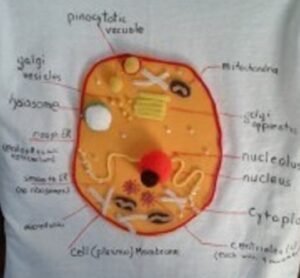
We used craft felt, yarn, pompoms, and other sewing craft items to create our animal cell T-shirt. Just use a plain white T-shirt and let your imagination run loose to create your very own animal cell T-shirt!
Gather These Materials to Get Started
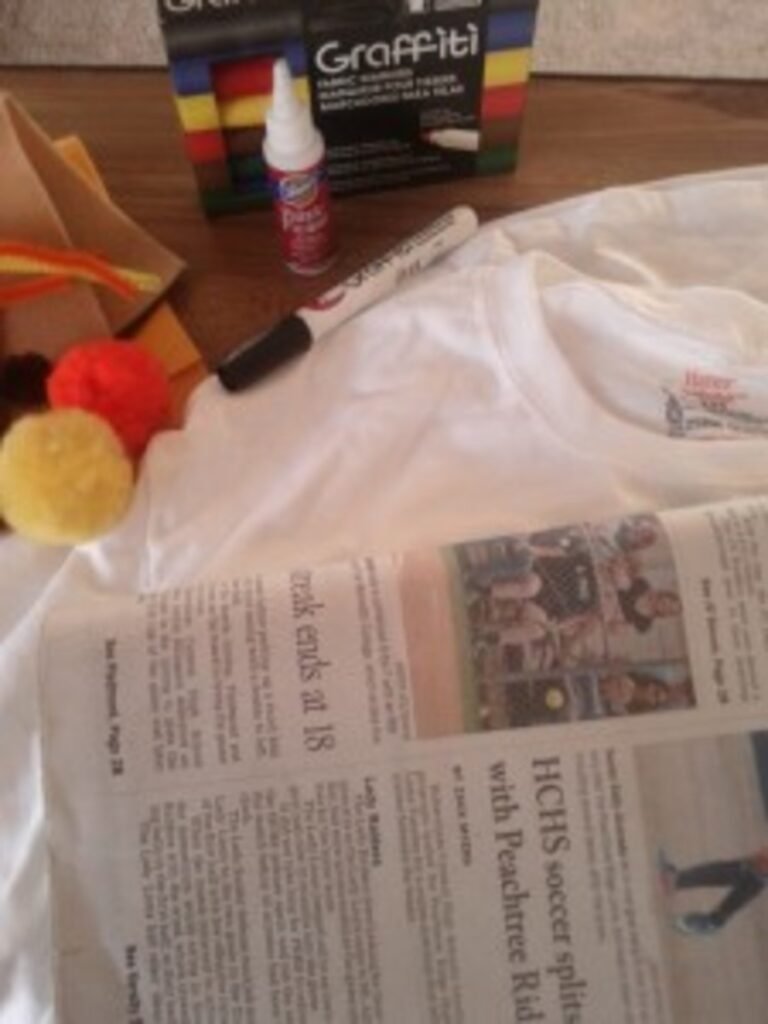
You’ll need a plain white T-shirt, fabric glue, fabric markers, stiff cardboard, and an array of buttons, pom poms, chenille stems, or whatever your imagination and resources come up with.
Do This First
Insert cardboard or newspaper inside the T-shirt first. That way the glue won’t stick the back to the front.
Cytoplasm and Cell Membrane
We cut and glued the cytoplasm from a piece of yellow craft felt. The cell membrane is a strip of red yarn.
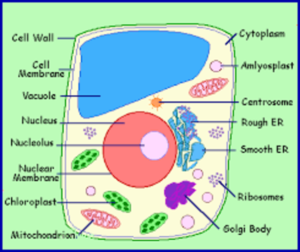
A Diagram To Follow
Golgi Apparatus and Golgi Vesicles
Golgi apparatus is 5 pieces of yellow chenille (pipe cleaner) stems. Golgi vesicles are 5 tiny yellow pom-poms
Lysosome and Pinocytotic Vacuoles
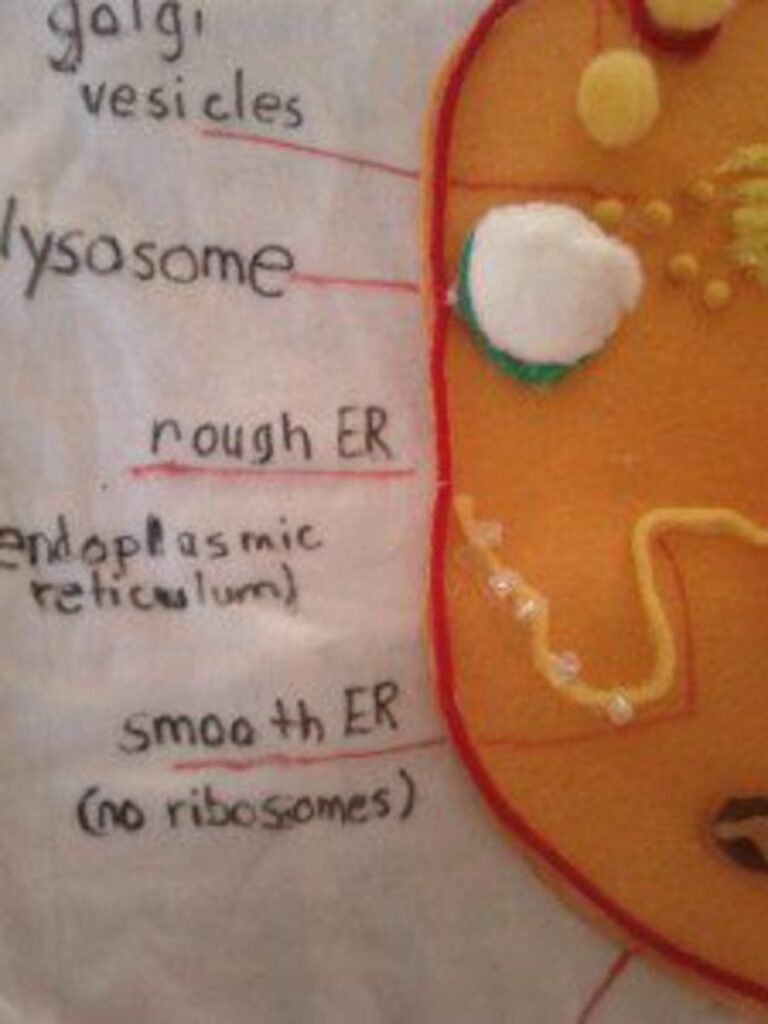
A large white pom-pom encircled with a strip of green yarn is our lysosome. Medium-sized yellow pom-poms are pinocytotic vacuoles.
Nucleus and Nucleolus
The nucleus is made with a large orange pom-pom, and a brown medium-sized pom-pom is a nucleolus
Smooth Endoplasmic Reticulum and Ribosomes
Yellow yarn is the smooth endoplasmic reticulum. Clear plastic beads are ribosomes and create the rough ER.
Microtubules and Centrioles
White pipe stems are the microtubules. Two pink buttons are the centrioles. Nine red dots around each button form the microtubules.
Mitochondria
Mitochondria are fashioned from two colors of felt. We used tan and brown. Three layers are glued on the largest bottom piece
Make your wearable animal cell project just like ours, or use different materials and colors to create your very own animal cell t-shirt! Use fabric markers to decorate your t-shirt and give it some extra pizzazz.
How an Animal Cell Works
Animals are made of cells, the smallest unit of life. The cell is so tiny you can only see one with a microscope, but it has many parts. The parts are called organelles, and each one plays a different role.
The cell membrane surrounds the cell, acting as a barrier. Made of protein, the cell membrane can expel waste from the cell. The liquid inside the cell is called cytoplasm, and all the organelles are covered with it.
The nucleus is large and circular. It can be broken down further to include the nucleolus. Sometimes a cell has more than one nucleolus. This part of the cell contains RNA and chromosomes. When cells divide or replicate, the chromosomes wind up tightly to form the cell’s DNA. This ensures the animal’s traits are passed on.
The rough and smooth endoplasmic reticulum (ER) transports nutrients throughout the cell. Ribosomes give the ER a rough appearance, while smooth ER contains proteins, lipids, and enzymes.
The Golgi apparatus packs nutrients into little sacs called lysosomes that connect to the cell membrane and transport nutrients throughout the cell.
The mitochondria convert stored energy called glucose, a type of sugar, to do work like moving or dividing. The pinocytotic vacuoles work with the cell membrane to break down nutrients within the cell.
Prefer Making a Plant Cell T-Shirt?
Check out our Plant Cell T-Shirt project here.
1 Comment